Breast Feeding
DangerousIt is not recommended to take this medicine while breastfeeding.
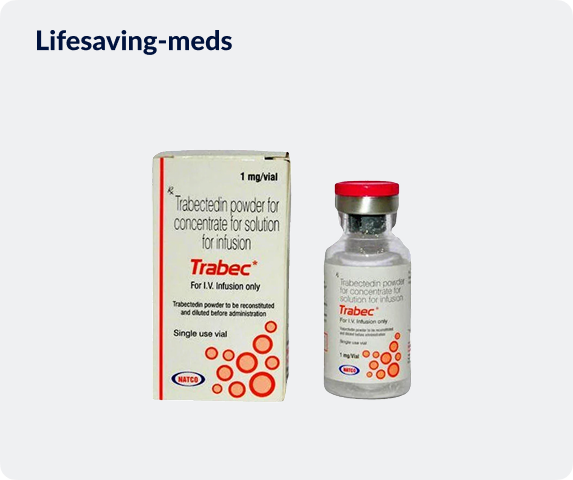
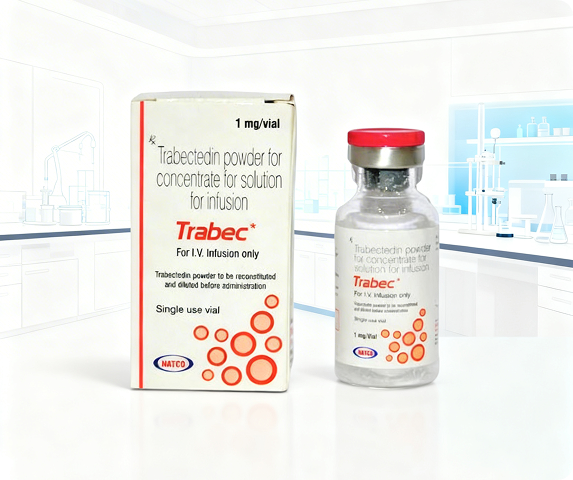
Trabec 1mg Injection is a high-quality product manufactured under strict quality control standards. Please consult with healthcare professional for specific information.
Soft-tissue sarcomas are cancers that arise from connective tissue, such as fat tissues, muscles, nerves, and blood vessels. When the cancer has reached an advanced stage, the spread of the tumor is such a large extent that surgical removal would be ineffective. Trabec 1mg Injection is used in the treatment of advanced STS as it can slow down the growth of the tumour and limit its spread. As such, the injection can simultaneously help in controlling the disease and managing its symptoms.
Liposarcoma (liposarcoma is a cancer of fat tissue) and leiomyosarcoma (leiomyosarcoma is a cancer of smooth muscle tissue) are both types of soft-tissue sarcomas that are aggressive and are often resistant to treatments. Patients with liposarcoma or leiomyosarcoma may have recurrent tumours, which may spread further even after receiving prior treatment.
Trabec 1mg Injection can assist in limiting tumour progression or minimising the spread of tumours in those patients with advanced disease who have already been treated with other forms of therapy.
Ovarian cancer, as the name suggests, develops in the ovaries and has a chance of returning. This phenomenon can occur despite medical intervention through either surgery or chemotherapy. In such cases, additional treatments and therapies can be required to manage and slow down the rate at which it spreads. For this indication, Trabec 1mg Injection, together with Doxorubicin (liposomal form), can assist with managing symptoms and the rate at which the cancer is progressing by delaying further growth of the tumor.
Platinum-sensitive ovarian cancer is the type of ovarian cancer that initially responds to platinum-based chemotherapy treatment (the patient experiences positive effects after treatment). However, after a period of time, the cancer no longer responds to platinum-based chemotherapy, and alternative treatment approaches must be implemented to control the cancer. Trabec 1mg injection assists by delaying further progression of the disease and helping to maintain control over the tumor when re-treating or using platinum-based chemotherapy is not a suitable option.
The dosage for Trabec 1mg Injection is based on the patient’s body surface area (BSA- measured in m²). Hence, the unit of measurement for this drug is mg/m².
Unlike normal cells that grow through controlled processes, cancer cells grow rapidly and uncontrollably. They are able to evade programmed cell death and have different methods to repair the damaged DNA, unlike normal cells. Cancer cells primarily use very high levels of continual transcription and replication of their DNA to support rapid rates of cell division. Many types of cancer (particularly soft tissue sarcoma and ovarian cancer) have defective or excessive activity in the cellular machinery responsible for repairing damaged DNA. Because of this failure, cancer cells can live, grow, and multiply in spite of many genetic changes.
Trabec 1mg Injection consists of the drug Trabectidin, which works at the genetic level in cancer cells. This drug binds to the minor groove of the DNA helix and forms an adduct that causes a bending or distorting of the DNA helix. This change in structure interrupts the transcription of the DNA. Specifically, the interruption occurs in those portions of the DNA that contain genes coding for the survival and growth of cancer cells. Due to loss of transcription, the genes coding for growth are thus inhibited by the continued interruption of the transcription process.
Trabec 1mg Injection inhibits the nucleotide excision repair (NER) process, which causes repair-related proteins to be trapped at the site of DNA damage instead of facilitating DNA repair. This trapping produces a buildup of DNA strand breaks & leads to an accumulation of unresolved DNA damage in the cancer cell. This process pushes the cancer cell into a cell cycle arrest & eventually to apoptosis.
Trabec 1mg Injection also has a significant impact on the tumor microenvironment. It reduces the activation of macrophages associated with the tumor & the inflammatory mediators that promote tumor growth, angiogenesis, & metastasis. This modified tumor-supportive environment makes it more difficult for the tumor to sustain itself.
In this way, through direct DNA damage, inhibition of transcription, disruption of DNA repair pathways & alteration of the tumor-supportive environment, Trabec 1mg Injection produces anti-tumor effects by inhibiting cellular proliferation & enhancing cancer cell death.
1. Blood & Bone Marrow Effects
Neutropenia (low white blood cells)
Increased risk of infections
Sepsis (serious infection)
Anemia (low red blood cells)
Thrombocytopenia (low platelets)
Easy bruising
Unusual bleeding (gums, nosebleeds, blood in urine/stool)
Pale skin, weakness
2. Gastrointestinal (Stomach & Digestive)
Nausea
Vomiting
Diarrhea
Constipation
Loss of appetite (anorexia)
Abdominal/stomach pain
Mouth sores/ulcers
Sore mouth or throat
Difficulty eating or swallowing
3. Liver-Related (Very Important)
Elevated liver enzymes (very common)
Hepatotoxicity (liver damage)
Jaundice (yellow skin/eyes)
Dark urine
Pale stools
Right upper abdominal pain
Severe liver injury
4. Muscle & Tissue Effects
Muscle pain (myalgia)
Joint pain (arthralgia)
Muscle weakness
Increased creatine kinase
Rhabdomyolysis (severe muscle breakdown)
Dark-colored urine (from muscle damage)
5. Heart & Circulatory Effects
Heart failure
Cardiomyopathy
Chest pain or discomfort
Irregular or fast heartbeat
Swelling of legs/feet (edema)
Sudden weight gain
Shortness of breath
6. Capillary & Fluid-Related
Capillary leak syndrome (fluid leakage into tissues)
Generalized swelling (edema)
Low urine output
Feeling faint or dizzy
7. Kidney & Urinary Effects
Increased serum creatinine
Reduced urine output
Renal (kidney) impairment or failure
Painful urination
8. Nervous System & General
Fatigue (very common)
Weakness
Headache
Dizziness/fainting
Insomnia (difficulty sleeping)
9. Respiratory Effects
Shortness of breath (dyspnea)
Cough
Chest tightness
10. Skin & Injection Site Reactions
Pain, redness, swelling at the injection site
Extravasation (drug leakage causing tissue damage)
Skin rash
Itching
Blisters or sores
Tissue necrosis (rare but serious)
11. Allergic/Hypersensitivity Reactions
Rash, hives
Swelling of the face, lips, and tongue
Difficulty breathing
Severe allergic reaction (anaphylaxis)
12. Metabolic & General Effects
Decreased appetite
Peripheral edema
Weight changes
13. Reproductive Effects
Infertility (in men and women)
Embryo-fetal toxicity (harm to unborn baby)
14. Other Notable Effects
Fever
Chills
Mouth infections
General feeling of illness (malaise)
Delayed wound healing
Severe liver damage
Rhabdomyolysis
Heart failure/cardiomyopathy
Severe infections / neutropenic sepsis
Severe allergic reactions
Capillary leak syndrome
Trabec 1mg injection is mainly used in the treatment of certain advanced and recurrent types of cancers.
Trabec 1mg Injection is administered through an intravenous (IV) infusion in a single cycle.
Yes. Trabec 1mg Injection is classified under chemotherapy, but has a better targeted action than traditional chemotherapy.
Common side effects caused by Trabec 1mg Injection include fatigue, nausea, vomiting, loss of appetite, etc.
Yes. Trabec 1mg Injection can cause liver toxicity in some individuals.

It is not recommended to take this medicine while breastfeeding.

It is unknown whether it is safe to drink alcohol while taking this medicine.
Inform your physician if you have any liver disorders before taking this medicine.
Inform your doctor about lung issues while on this medicine.
This medicine can cause tiredness. Avoid driving if you are unwell.

It is not recommended to take this medicine during pregnancy.

This medicine can be taken with food to reduce stomach irritation.

This medicine can be taken on an empty stomach for faster absorption.